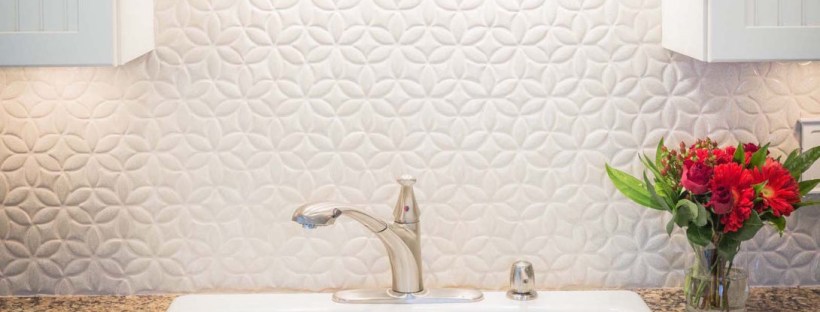
Not everything that people do to update their homes ends up bringing value to the property but tile is something that adds beauty and can increase the price of a home. It’s a great way to update or even upscale the look of a house. Tile gives homeowners a chance to be whimsical, express their individuality or make a bold statement. The options in style, shape and color are virtually limitless and homeowners can find smart ways to utilize tile throughout their property. From floors and backsplashes in kitchens and bathrooms to wainscoting (where a wall needs protection or a splash of pizazz), tile can make it happen, beautifully. Here are five types of tile to consider:
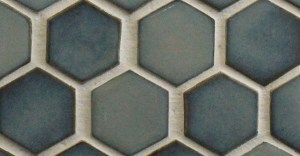
Unique, handmade artisan tiles make your home one-of-a-kind and come in an amazing array of styles and colors.
Artisan Tile
Sometimes referred to as “handcrafted tile”, artisan tile is a beautiful choice that can be made in whatever colors, patterns or shapes fit the project. This type of tile is unique because it is custom designed and can even be one-of-a-kind. Often eco-friendly, these tiles can be made of recycled materials or natural materials. Because they are handcrafted (and glaze is brushed on by hand) when these tiles are fired in the kiln different hues and unique attributes come out of the material. From old-world, painted tiles to glossy, shaped tiles artisan tile could be the perfect touch for making a home spectacular.
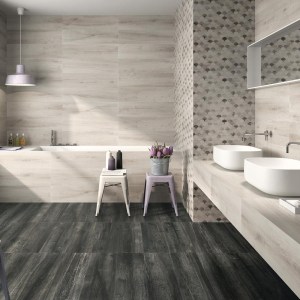
Ceramic tiled bathroom
Ceramic Tile
Ceramic tile is made of thin layers of clay that are hardened by firing and glazed. They are easily mass-produced and readily available. They are easy to clean and don’t harbor germs (so they are a great choice to use in the interior of a home). They come in an unending variety of styles, colors, shapes and sizes and are usually a more economical choice than porcelain. In fact, they are the least expensive type of tile. Perhaps that is why this type of tile continues to be so popular in home renovations and remodeling projects.
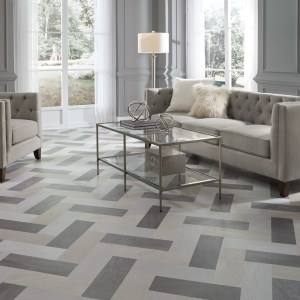
Porcelain tile flooring in living room.
Porcelain Tile
Porcelain tiles are made of finer and denser clay than ceramic tiles which makes them more durable. They can be used for flooring and are more waterproof than ceramic tiles. The strength of these tiles (and the fact that they are very easy to clean) make them a popular choice. As an added bonus, they are not expensive to repair and maintain. They also come in colors, shapes and styles to fit almost every project. As is illustrated in the photo, combining different tiles (or the same tile in different colors) can create a stunning and dramatic look. Tiles can also be more subdued and elegant, combined and arranged to express whatever style pleases the homeowner.
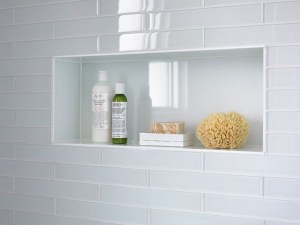
Glass tile shower niche and wall.
Glass Tile
Glass tile is non-porous and can be used on the interior or exterior of the home. They are also great for swimming pools. Glass tiles are gaining in popularity because of their beauty and the fact they can be used in mosaics. They come in many different finishes like polished, frosted, etched, cracked and reflective and they come in thousands of colors, shapes and sizes.
Metal Tile
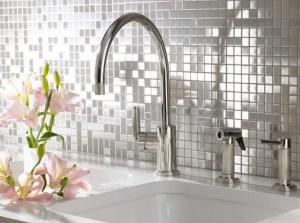
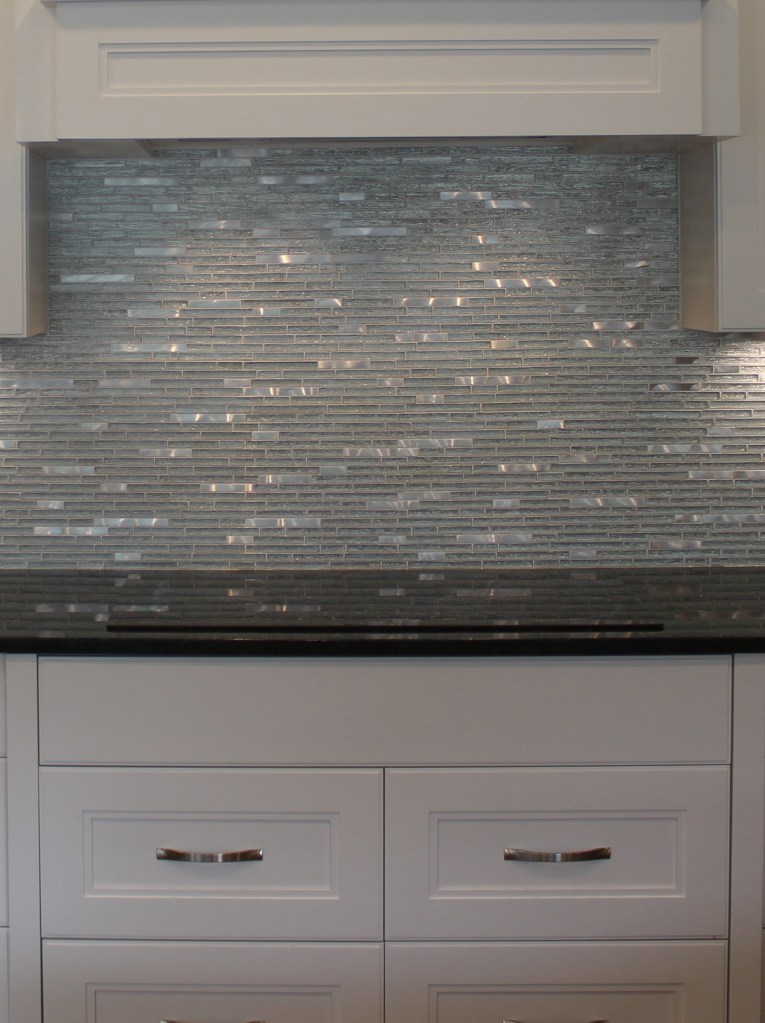
Metal tile backsplash.
For something different (or to add sparkle and richness) some homeowners are looking to metal tile. Traditionally, this type of tile was used for accents but more and more people are trying them where they used to utilize other types of tile. These tiles may be solid metal or may have a metallic glaze. Copper, bronze, silver, titanium, pewter and stainless steel are just a few of the options available in metal tiles. Depending on what type of metal tile is utilized (and where the tile is located) there may be specialized maintenance or cleaning required to keep the tile looking like new.
 Because of the limitless possibilities available in all types of tile, you may want to consult with a designer to help you find the perfect tile for your project. Tile selection is one of the services offered to Perry Newman Design clients and is just one, small piece of the process that takes homeowners from conception, through construction, to the completion of their unique home remodel. Click to call Perry now and get started!

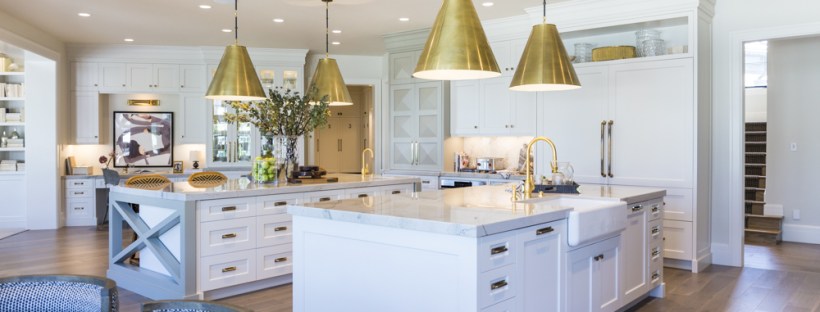
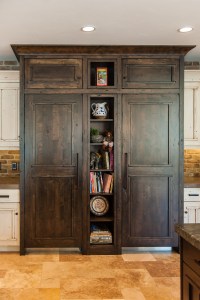 Cabinetry design and selection is a very important element of a home renovation. While people generally think of cabinetry as being for kitchen’s and bathroom’s, cabinets can enhance many areas of your home. Consider how cabinetry can customize a craft room, create the perfect designer closet, make an appealing feature that hides entertainment components, display art or organize your laundry room. Besides being important for design and function, cabinetry will be one of the biggest expenses in a renovation so shop smart and make sure you balance price, quality and function to find the perfect cabinets for your home.
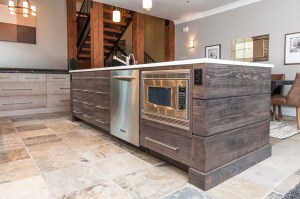 “Just be careful,” he warns, “to check the quality of the melamine. There is some coming in from China that is low quality and if you put a hot glass (right out of the dishwasher) on it, it will bubble up and warp. That can also happen with wood in the bottom of drawers so quality melamine is better.”
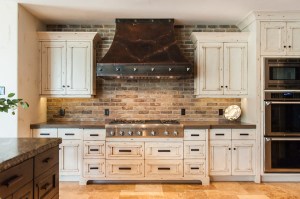 Hardware is something people seldom ask for details about but you can spend a little or a whole lot on pulls and handles. Better quality hardware is made in the United States or Germany. If you order online or through a box store without direction from your cabinet maker or designer you might end up with lower quality pulls and drawers that don’t work or don’t last like they would have if more care had been taken in the hardware selection. “There is nothing more frustrating than a drawer that doesn’t work.”
 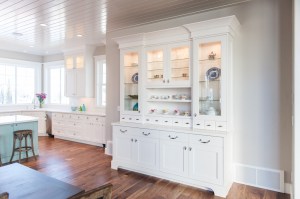 Check for gaps, untreated wood, splinters and chipped edges. A well-made cabinet will not have these evidences of poor craftsmanship. Another key indicator is to look for 100 percent, perfect right angles on each joint and corner of the cabinetry.
 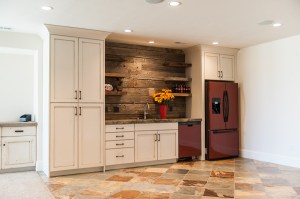 Checking the drawers can give you clues about the quality of the product. Drawers that have steel ball bearings in the roller mechanisms and metal fittings are better quality than those with plastic and nylon. Ask about the load rating for how much weight the drawers can hold. The higher the number, the better. If the drawer is built to hold more weight, it needs to be built better. Features like soft close and full-extension guides (that allow you to access even the very back of the drawer) can also be indicators that your cabinetry is of higher quality. Also, ask about options like custom pegs and dividers (see below). Quality cabinet builders will offer those types of customization.

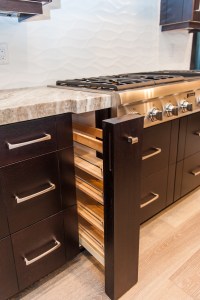 Use the cabinets before you decide. Open doors, slam drawers, see how the cabinetry feels in the showroom or in projects that builder has completed before you order it for your home. There shouldn’t be any wobbling and the doors and drawers should feel smooth when you use them. Think about how you utilize your cabinetry and make sure that the way the cabinets you are considering function will meet your needs. One tip that has become quite a work-saving trend is to plan to store your dishes in drawers instead of upper cabinets. It’s so much easier to move dishes from the dishwasher into deep, lower drawers that it is to lift heavy plates up into high cabinetry. Another tip is those drawer dividers and custom pegs mentioned earlier help organize your kitchen, maximizing efficiency and making a place for every kitchen gadget and tool.
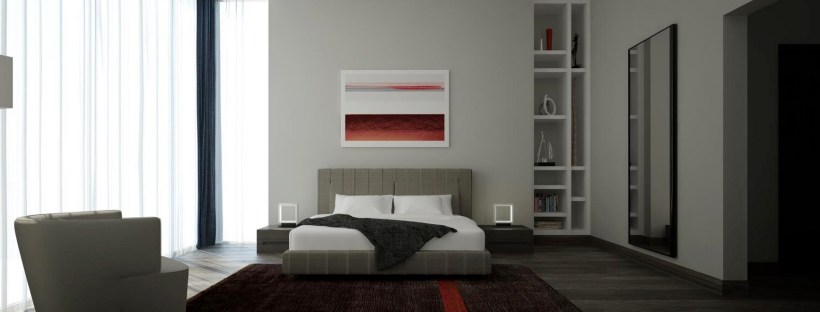
 Getting ready to remodel or maybe just feeling like updating and freshening the look of your home? Enjoy these ten, professional interior design tips that will help you get it right.
 Speaking of light, sunlight is a wonderful tool. Add windows (or at least clean the ones you have so they shine). Remember that glass sparkles and sunlight gives the illusion of a bigger space. Natural light is warm and inviting, it relaxes people. Choose accent pieces that accentuate the light. For example, yellow pillows or window treatments are bright and cheerful. In fact, the color yellow actually stimulates conversation in your gathering spaces.
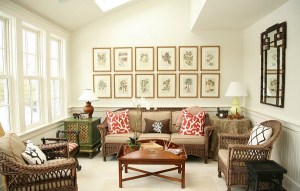 When it comes to art bigger is not necessarily better. Selecting appropriate art to use in design can be intimidating and the whole process is subjective. People like what they like and what one person considers incredible may not be interesting to someone else. Since art can be expensive, it is common for homeowners to get overwhelmed or frustrated while making these selections. If you find yourself in this situation consider using a collection of small prints and having them framed in matching frames. Then, carefully arrange these on the feature wall to make an engaging point of interest.

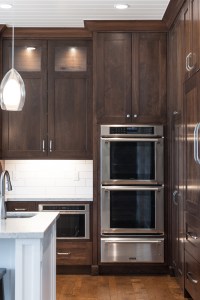 When considering paint choose a base color and then purchase a 50% lighter mix as well as a 150% darker mix of the same color. Use these in your room to simulate texture (as would happen if you striped a wall) or to add interest with accent pieces. Another tip with color is that if your room feels dark (because of color or cabinetry) you can paint the ceiling a lighter version of the wall color and it will instantly brighten the room.


 perry-newman-design.com