 Since the 70’s, the microwave oven has been an American household staple and for many people it is the primary way that they cook, defrost and reheat food. However, microwaves are not especially attractive so careful planning and placement of this go-to, time saver are key when creating the kitchen of your dreams.
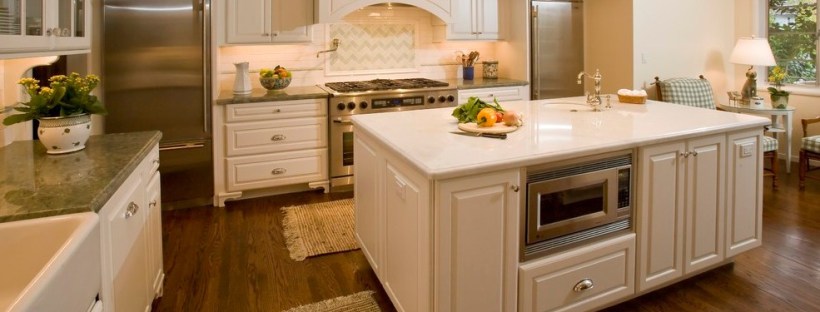
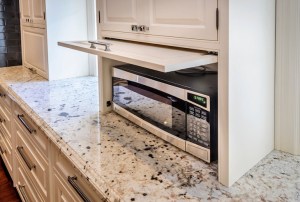
Different types of microwaves are available to complement a variety of kitchen styles so your designer will help you select the placement and walk you through the decision-making process to choose the right unit. What you decide about placement will also affect the type of appliance you choose but, generally, your choices are between setting the microwave on the countertop, mounting it over the range, setting it into cabinetry or having one built-in.
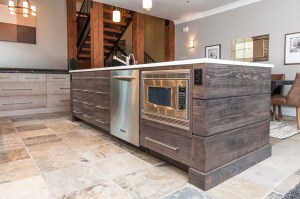
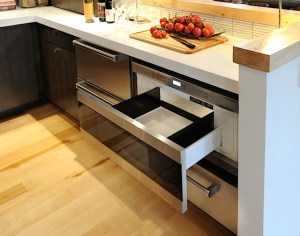 To enhance the beauty of the kitchen, many re-modelers are choosing to put the microwave into the island by designing the cabinetry to hold a traditional microwave underneath the countertop or installing a microwave drawer. Although this might be a new concept (and test your sense of tradition) there isn’t a lot of bending involved in using a microwave in the island. Controls for a microwave drawer are easily accessible and, for safety, it makes sense to lift food up a few inches onto your countertop instead of reaching up into a microwave to bring hot foods down toward you before carrying them to a safe landing zone.
If a traditional microwave isn’t for you (but you still want to be able to cook and reheat foods quickly), you have some choices that might work better for your kitchen.
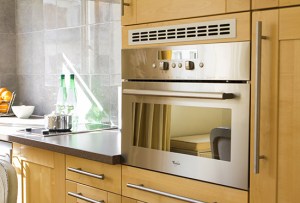 Convection/microwave combo ovens are a mix of microwave technology and heat energy, so they can brown, roast and grill. They also have a heating element in addition to a fan that aides in the circulation of hot air. This means that you get the quick, internal heating of microwave technology combined with heat that keeps the outside crispy (or whatever consistency the food should have). A microwave-only unit sometimes makes food soggy or rubbery so you can tell it has been heated that way.
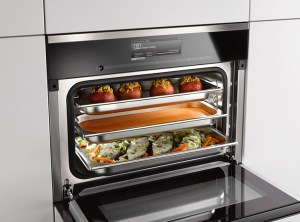 Another option is to select a steam oven. These can be used to steam, reheat, bake, defrost or to cook so they are extremely versatile. You can even cook rice in them. They take a little longer than a microwave but the condition of the food when it is finished is incredible. If you are reheating leftovers it will be hard to tell that they are leftovers after being heated in a steam oven. Also, because of the many features this appliance offers, you can set the oven and walk away from foods that would traditionally take more effort to create. A steam oven is a wonderful tool and a viable choice for replacing or adding as a companion to a traditional microwave oven. If you are remodeling your kitchen it is worth taking the time to look into the benefits of this type of oven.
 When planning your kitchen don’t forget to ponder the importance of selecting the right quick-cooking appliance and think about choosing to place it in a convenient location that doesn’t distract from the look of your new kitchen. Perry Newman Design clients get educated on their microwave options and all their appliance selections. Plus, they get someone to walk them through every step of the planning, selection and construction process. Perry Newman Design guides you through your home renovation project from conception, through construction, to completion in less time than you imagine. Call 801.971.0868 today and experience the peace of mind that comes from letting someone else take care of getting all the little details right.

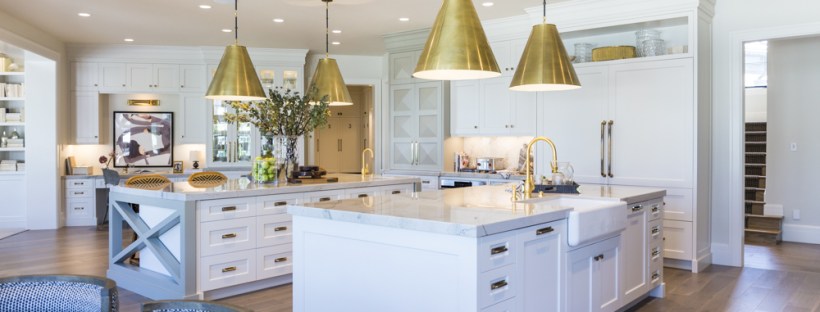
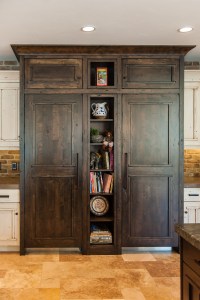 Cabinetry design and selection is a very important element of a home renovation. While people generally think of cabinetry as being for kitchen’s and bathroom’s, cabinets can enhance many areas of your home. Consider how cabinetry can customize a craft room, create the perfect designer closet, make an appealing feature that hides entertainment components, display art or organize your laundry room. Besides being important for design and function, cabinetry will be one of the biggest expenses in a renovation so shop smart and make sure you balance price, quality and function to find the perfect cabinets for your home.
 “Just be careful,” he warns, “to check the quality of the melamine. There is some coming in from China that is low quality and if you put a hot glass (right out of the dishwasher) on it, it will bubble up and warp. That can also happen with wood in the bottom of drawers so quality melamine is better.”
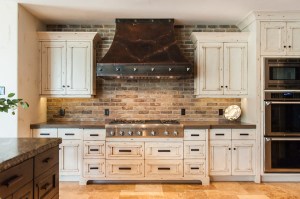 Hardware is something people seldom ask for details about but you can spend a little or a whole lot on pulls and handles. Better quality hardware is made in the United States or Germany. If you order online or through a box store without direction from your cabinet maker or designer you might end up with lower quality pulls and drawers that don’t work or don’t last like they would have if more care had been taken in the hardware selection. “There is nothing more frustrating than a drawer that doesn’t work.”
 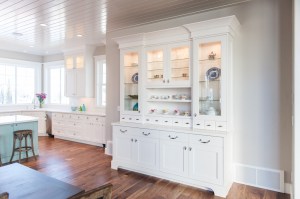 Check for gaps, untreated wood, splinters and chipped edges. A well-made cabinet will not have these evidences of poor craftsmanship. Another key indicator is to look for 100 percent, perfect right angles on each joint and corner of the cabinetry.
 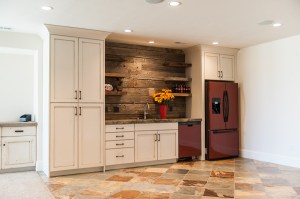 Checking the drawers can give you clues about the quality of the product. Drawers that have steel ball bearings in the roller mechanisms and metal fittings are better quality than those with plastic and nylon. Ask about the load rating for how much weight the drawers can hold. The higher the number, the better. If the drawer is built to hold more weight, it needs to be built better. Features like soft close and full-extension guides (that allow you to access even the very back of the drawer) can also be indicators that your cabinetry is of higher quality. Also, ask about options like custom pegs and dividers (see below). Quality cabinet builders will offer those types of customization.

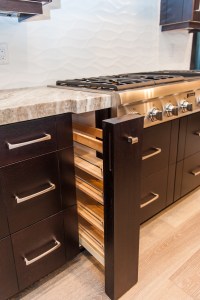 Use the cabinets before you decide. Open doors, slam drawers, see how the cabinetry feels in the showroom or in projects that builder has completed before you order it for your home. There shouldn’t be any wobbling and the doors and drawers should feel smooth when you use them. Think about how you utilize your cabinetry and make sure that the way the cabinets you are considering function will meet your needs. One tip that has become quite a work-saving trend is to plan to store your dishes in drawers instead of upper cabinets. It’s so much easier to move dishes from the dishwasher into deep, lower drawers that it is to lift heavy plates up into high cabinetry. Another tip is those drawer dividers and custom pegs mentioned earlier help organize your kitchen, maximizing efficiency and making a place for every kitchen gadget and tool.
 perry-newman-design.com