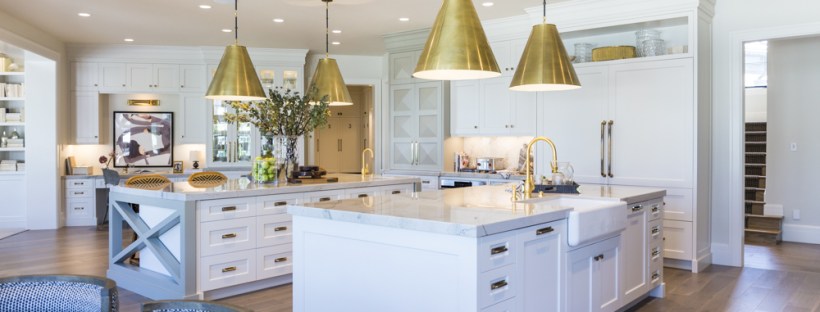
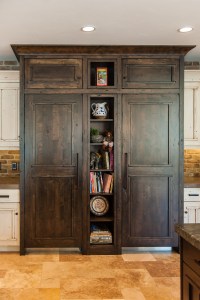
 Cabinetry design and selection is a very important element of a home renovation. While people generally think of cabinetry as being for kitchen’s and bathroom’s, cabinets can enhance many areas of your home. Consider how cabinetry can customize a craft room, create the perfect designer closet, make an appealing feature that hides entertainment components, display art or organize your laundry room. Besides being important for design and function, cabinetry will be one of the biggest expenses in a renovation so shop smart and make sure you balance price, quality and function to find the perfect cabinets for your home.
Thicker materials make better cabinetry. Your cabinetry boxes should be at least three-quarters of an inch thick. Some cabinet makers will try to cut costs by using material that is five-eighths of an inch for their boxes instead. If your cabinetry is made well and of quality materials it will stay sturdy and not shift or warp. There are many things that happen in a kitchen or bathroom that cause moisture to interact with your cabinetry so you need quality materials that can stand up to the test of cooking and bathing so they’ll stay looking beautiful and work properly over time. Melamine interiors are a great choice for cabinets and drawers. In fact, Perry Newman believes having melamine for the interior of drawers is better than wood.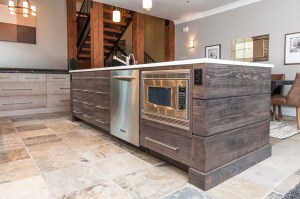 “Just be careful,” he warns, “to check the quality of the melamine. There is some coming in from China that is low quality and if you put a hot glass (right out of the dishwasher) on it, it will bubble up and warp. That can also happen with wood in the bottom of drawers so quality melamine is better.”
Doors are the most expensive item of a cabinetry purchase. Take time to educate yourself and know what the doors are made of before you order. So much of your cost and the success of the design rides on this decision because cabinetry is big and expensive and can’t easily be switched out like other things in the home. The cost of cabinetry varies so drastically that you really need to think about how much you want to spend and get the highest quality and function for that price. Perry Newman suggests you decide on your goal for the cabinets and work to achieve the best balance in what you purchase.
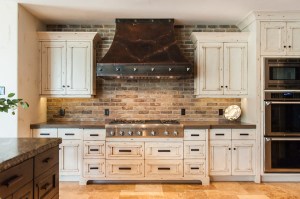 Hardware is something people seldom ask for details about but you can spend a little or a whole lot on pulls and handles. Better quality hardware is made in the United States or Germany. If you order online or through a box store without direction from your cabinet maker or designer you might end up with lower quality pulls and drawers that don’t work or don’t last like they would have if more care had been taken in the hardware selection. “There is nothing more frustrating than a drawer that doesn’t work.” Perry Newman explains, “I’ve had people want to renovate a whole kitchen over that.”
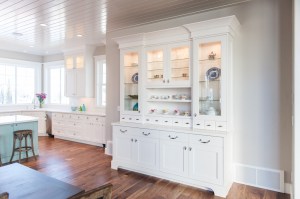 Check for gaps, untreated wood, splinters and chipped edges. A well-made cabinet will not have these evidences of poor craftsmanship. Another key indicator is to look for 100 percent, perfect right angles on each joint and corner of the cabinetry. Perry Newman says people should take time to understand how their cabinetry is built. Ask questions, a good cabinet maker knows how to explain the process and can tell you in detail how your pieces will come together.
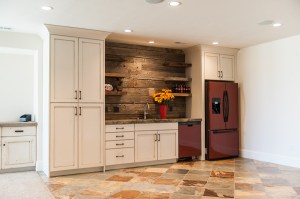 Checking the drawers can give you clues about the quality of the product. Drawers that have steel ball bearings in the roller mechanisms and metal fittings are better quality than those with plastic and nylon. Ask about the load rating for how much weight the drawers can hold. The higher the number, the better. If the drawer is built to hold more weight, it needs to be built better. Features like soft close and full-extension guides (that allow you to access even the very back of the drawer) can also be indicators that your cabinetry is of higher quality. Also, ask about options like custom pegs and dividers (see below). Quality cabinet builders will offer those types of customization.


Look at the shelving inside the cabinets. Better quality cabinetry generally has more adjustable shelving and less fixed shelves. While you are in there, look at the hardware holding the shelves in place. You want to find a cabinet builder that uses metal hardware, not plastic, because the shelves will hold more weight, stay in place better and last well over time.
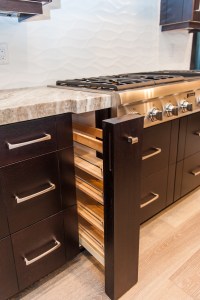 Use the cabinets before you decide. Open doors, slam drawers, see how the cabinetry feels in the showroom or in projects that builder has completed before you order it for your home. There shouldn’t be any wobbling and the doors and drawers should feel smooth when you use them. Think about how you utilize your cabinetry and make sure that the way the cabinets you are considering function will meet your needs. One tip that has become quite a work-saving trend is to plan to store your dishes in drawers instead of upper cabinets. It’s so much easier to move dishes from the dishwasher into deep, lower drawers that it is to lift heavy plates up into high cabinetry. Another tip is those drawer dividers and custom pegs mentioned earlier help organize your kitchen, maximizing efficiency and making a place for every kitchen gadget and tool.
 If all this talk about testing and quality and finding balance kind of makes your head spin, consider getting the help of a professional designer to lead you through all your selections. The Perry Newman Design team specializes in finding the best choices and guiding you through the selection process to find the highest quality materials while keeping you on schedule and in budget. A designer will also have experience with different products and suggestions about ways to utilize all the latest advancements in cabinetry and the other elements of your renovation. The process starts with a free, in-home consultation so call and schedule today 801.971.0868 or fill out the contact form on perrynewmandesign.com.


 Getting ready to remodel or maybe just feeling like updating and freshening the look of your home? Enjoy these ten, professional interior design tips that will help you get it right.
 Speaking of light, sunlight is a wonderful tool. Add windows (or at least clean the ones you have so they shine). Remember that glass sparkles and sunlight gives the illusion of a bigger space. Natural light is warm and inviting, it relaxes people. Choose accent pieces that accentuate the light. For example, yellow pillows or window treatments are bright and cheerful. In fact, the color yellow actually stimulates conversation in your gathering spaces.
 When it comes to art bigger is not necessarily better. Selecting appropriate art to use in design can be intimidating and the whole process is subjective. People like what they like and what one person considers incredible may not be interesting to someone else. Since art can be expensive, it is common for homeowners to get overwhelmed or frustrated while making these selections. If you find yourself in this situation consider using a collection of small prints and having them framed in matching frames. Then, carefully arrange these on the feature wall to make an engaging point of interest.

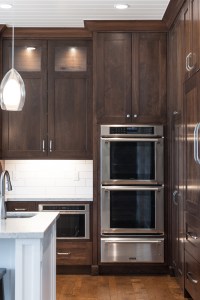 When considering paint choose a base color and then purchase a 50% lighter mix as well as a 150% darker mix of the same color. Use these in your room to simulate texture (as would happen if you striped a wall) or to add interest with accent pieces. Another tip with color is that if your room feels dark (because of color or cabinetry) you can paint the ceiling a lighter version of the wall color and it will instantly brighten the room.
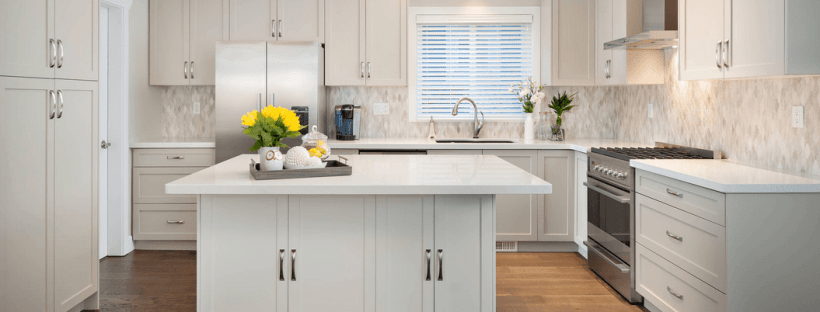







 3) Budget—Everything has a price and you need to realistic about what you can afford. You may end up with the kitchen of your dreams but, if paying for it becomes a problem then the remodel becomes a burden and, you won’t enjoy it no matter how amazing it is. Decide what you can afford to spend. Then, be realistic by understanding that what you may think is a lot of money may not buy you as much as you hoped. You might want to do some research to understand remodeling costs (but make sure you are looking at prices in your area). Your construction professional will be able to give you some guidance but it’s smart to be informed about the finances before you start the process.
 If you make a list, prioritizing wants and needs, then consider your budget and time requirements you will be informed and prepared when you start to interview renovation professionals. Going forward, it becomes a challenge of balancing those four things to end up with a beautiful home you are pleased with. You may need to give up some of your wants to meet the budget. Or, to get more of your wants you might need to do the project in phases (which takes more time). Or, you may decide to increase your budget so you can have all your wants and needs. Maybe, to meet your time requirements, you will choose to use materials that your designer has on hand instead of special ordering. Whatever you do, find a balance between these four things and let your experienced professional help you figure out the combination that will give you a home you’ll love to live in.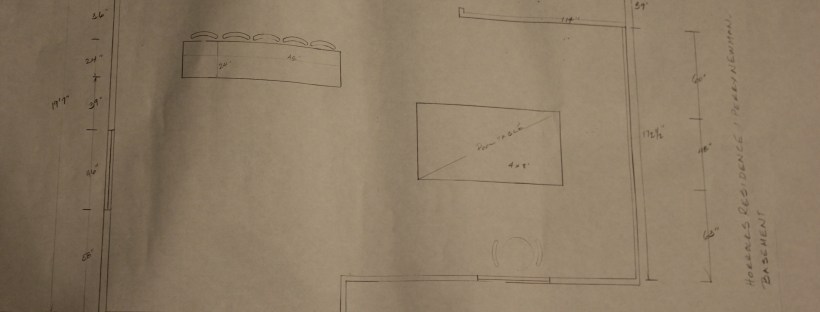
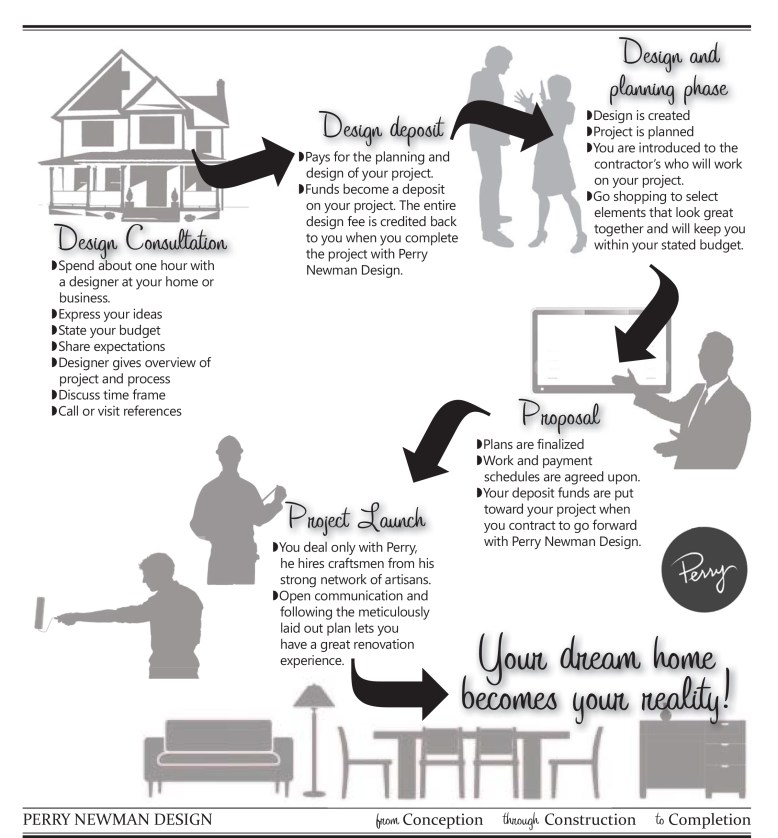
 The process begins when you make a call to schedule your in-home, design consultation. A designer will come to your home and spend about an hour with you; looking at your house and listening to your expectations for the project. You, as the owner, should state your budget and any schedule requirements. Together, you start to create the concept that will be the inspiration for your project.
 The next step is to pay your design fee. For Perry Newman Design customer’s, this is a small fee that pays for the design and planning of your project. The fee will be applied toward your renovation if you complete your project with Perry Newman Design. To plan and manage something of the scope of a home remodel takes a significant amount of time, planning and creativity. The fee pays for the time it takes to draw up mock ups, make selections, get bids from all the sub-contractors and work with the owner to create a plan and schedule that will allow the renovation to run as smoothly as possible.
 You work with your designer to shop and make selections (flooring, paint, cabinetry, hardware, etc.). You meet the sub contractor’s that will work on your project. Organizing all of these people and elements brings clarity to the plan and everyone agrees to the schedule.
 According to the agreed upon schedule, your project begins. Usually, the first step is demolition. Perry Newman Design customers have the benefit of hiring their designer and then he acts as project manager (hiring and overseeing everyone through the construction phase). This reduces stress on the homeowner because they only have to deal with one person and then that person runs the project and takes care of all the details. This is where the reward comes from all that organization and planning because, before the first hammer begins to drive nails, the owner, designer and workers all have an understanding of what will happen. Open and meticulous communication and agreements help avoid the typical messes and mistakes that can plague remodels and make the project take longer than expected.
 perry-newman-design.com